Grace Lawson and Emma Lawson’s mother-daughter relationship
Just One LookGrace Lawson and Emma Lawson’s mother-daughter relationship is built in ordinary acts of attention: bedtime, school mornings, homework, shared quiet, and the watchful care of a parent who knows both her child’s habits and the limits of what she can tell her. When Jack Lawson disappears, that closeness becomes harder to sustain. Emma notices the absence and presses for an explanation; Grace answers with protective lies, even as threats against her daughter make the risks of their situation immediate.
Everyday closeness and family routines
Grace’s care for Emma appears in the small routines that organize family life. At bedtime, while Jack reads to Max Lawson, Grace sits with Emma as she reads and sketches beside her. The quiet of being together in the same room is Grace’s favorite part of the day. Emma is old enough to read independently, but the shared space still matters: closeness here does not require conversation or constant attention to be felt.
Emma also has a familiar way of prolonging bedtime with her father, reaching up to hold him when he bends to kiss her good night. Grace recognizes the affection and the delay together. This moment places her within a family routine in which each parent has a distinct connection with the children, while her own bond with Emma includes the calm companionship of reading and drawing. The contrast does not diminish Grace’s closeness to her daughter; it shows the particular forms that affection takes in their household.
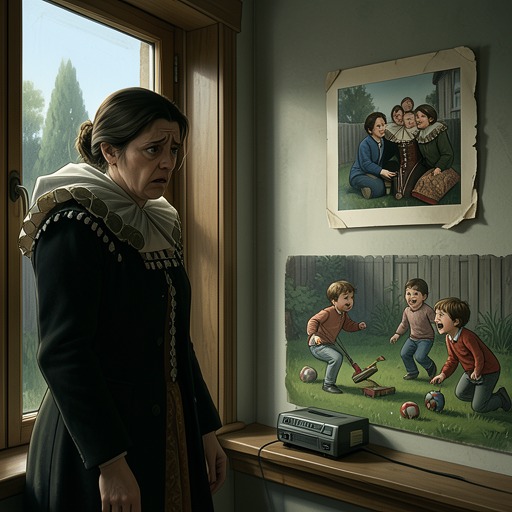
Grace’s maternal attachment also surfaces in her response to a family photograph. Seeing Emma and Max on a hayride, their shoulders hunched against the cold, brings back the warmth of the children as a concrete presence in her mind. She remembers that she had not wanted to make the outing, expecting the orchard to be crowded, and now questions the priorities that had made the trip seem like a burden. The photograph changes the emphasis: a routine family day becomes evidence of what matters to her.
Attentiveness to Emma’s developing self
Grace watches Emma’s preferences closely, though she does not always know how to respond to them. Emma favors athletic clothes, including basketball jerseys, shorts, and high-top shoes, and resists wearing dresses. Grace is uncertain about her daughter’s wish to be a jock, but regards it as preferable to the alternative she imagines of teenage magazines and boy bands. Her response is neither a simple celebration nor a rejection; it registers the negotiation involved in allowing Emma to define herself while Grace is still working out her own feelings.
That attention also appears in less charged exchanges. While helping Emma with multiplication homework, Grace tries to concentrate even as her thoughts are elsewhere. She tests Emma on the sixes, and when Emma pauses over a problem, reminds her that she should know it by heart. Later, when Emma says she has written a hockey verse for her poem, Grace invites her to share it. Such moments show care expressed through participation in schoolwork and an interest in what Emma is making, even when the family’s larger uncertainty makes ordinary attention difficult to maintain.
Grace recognizes traces of her own parents in her children. Emma’s pursed lips remind her of her mother, and the resemblance can stop Grace in place; she cannot decide whether these inherited echoes comfort her or make her feel the absence of her parents more sharply. The observation connects her experience of motherhood to the family history she carries herself. Emma is not only a child Grace is raising, but also someone in whom Grace encounters reminders of the generations before them.
Jack’s absence and protective concealment
After Jack is gone, Emma’s questions make clear that she does not accept the explanations Grace offers. During breakfast, Grace prepares cereal with sliced banana and deflects the children’s questions about their father. Later, when Emma asks where he is, Grace gives a vague account that he has to work. Emma and Max look wary. Emma’s poem and her questions about Jack arrive in the same household space, so Grace must respond to both the ordinary claim on her attention and the uncertainty surrounding their father.
The pressure becomes more explicit when Grace finds Emma crying in her room. Emma asks where Jack is, why he has not called, and when he will come home. Grace says that he is on a business trip, then supplies explanations involving work, travel in Europe, London, and the time difference. Emma does not believe the account and demands the truth. Grace nevertheless repeats it, reasoning that Emma is not old enough to handle what is happening and that a parent’s job is to protect. She knows that she could be wrong. The scene leaves open whether Emma is persuaded, but it shows that Grace chooses concealment deliberately, not because she fails to hear her daughter’s distress.
That choice sits uneasily beside Grace’s earlier efforts to keep family life reassuring. Emma had once asked to sleep beside her after hearing Grace scream. Grace made room for her on Jack’s side of the bed and held her close. At seven the next morning, Grace’s panic about Jack’s unexplained absence overtook the comfort of the night. Emma’s need for reassurance and Grace’s own fear occupy the same bedroom, but Grace continues to shield her daughter from the full account.
Threat, vigilance, and maternal resolve
As the danger around Grace’s search grows, Emma becomes a direct target of intimidation. A muffled male voice warns Grace to stop looking, asking questions, and showing the photograph, threatening that Emma will be taken first. Grace’s hands shake, but she puts the phone away and tries to compose herself before the children come out. Her effort to keep the fear from them is another form of protection, now imposed by a threat that names Emma specifically.
The threat sharpens Grace’s response at Emma’s school. After learning that her daughter has been threatened, Grace leaves the school building feeling fear harden into rage. She considers calling the police, then stops to ask herself what she can tell them. The moment reveals both her protective urgency and her constraint: she recognizes the obvious course of action but doubts what she can disclose about the danger and her investigation.
Grace’s watchfulness is not confined to moments of crisis. In a school corridor, her old limp aches as she looks through the classroom door and sees Emma absorbed in thought, chewing the end of a pencil. Emma does not know she is being watched. The brief observation moves Grace toward tears and raises her awareness of the distance between what a parent can see and what a child knows. Across the relationship, she attends to Emma’s ordinary gestures while carrying dangers and explanations that Emma cannot fully see.
The relationship under pressure
Grace and Emma’s bond is defined by attention, but attention does not guarantee agreement or complete understanding. Grace notices Emma’s moods, clothing, schoolwork, and fears; Emma, in turn, recognizes that Grace’s account of Jack’s absence does not ring true and continues asking questions. Grace’s protective strategy therefore preserves a boundary as much as it offers comfort. She withholds what she believes Emma cannot bear, while Emma’s insistence exposes the emotional cost of that decision.
The relationship’s everyday tenderness makes the concealment consequential. Shared reading, homework, poems, bedtime, and the memory preserved in a photograph belong to the same family life as the unanswered questions and threats. Grace’s care changes form as circumstances worsen: from quiet companionship and practical routines to deliberate reassurance, vigilance, and a fierce response when Emma is endangered. The novel presents motherhood not as certainty about what to say, but as Grace’s continuing effort to protect Emma while recognizing that protection can leave a child unconvinced and still afraid.